
Your Cat Is Not a Biohazard [FULL ARTICLE]
Your Cat Is Not a Biohazard
The real science on toxoplasmosis — plus an ancient perspective on why living with animals is good for you
A video is going around warning cat owners not to let their cats sleep with them — and some are even suggesting people should rehome or abandon their cats altogether — because of a parasite called toxoplasmosis. If you've seen it and felt worried, you're not alone. But before you banish your beloved pet, let's look at what the science actually says — and how we can take a loving, animal-friendly, informed approach to living with our cats.
Spoiler: the real risk is far smaller than the video suggests. And there's a much bigger, more empowering conversation to be had about why living closely with animals is actually good for us.

Image source: Freepik
1. What Is Toxoplasmosis — and Should You Really Be Worried?
Toxoplasma gondii is a tiny parasite. Cats can carry it in their digestive system and pass it out through their faeces. In theory, humans can pick it up from a contaminated litter box. That's the basis of the scare.
But here's what the video leaves out:
Your cat is probably not the main risk: Research consistently shows that the biggest sources of toxoplasmosis in humans are not cats — they're undercooked meat, unwashed fruits and vegetables and contaminated soil. That rare lamb chop or garden salad you didn't rinse properly? Far more likely to be your exposure route than your cat.
Most people already have it — and don't even know: It's estimated that over one third of the global population carry this parasite. The vast majority have zero symptoms, because a healthy immune system keeps it completely in check. It's a bit like how most of us carry the chickenpox virus our whole lives without it causing problems.
One simple habit almost eliminates the litter box risk: Here's a detail most fear-based videos skip: the parasite only becomes infectious 24 to 48 hours after being passed in cat faeces. So if you clean the litter box every day — wearing gloves and washing your hands — you've essentially removed the risk entirely. That's it. No drama needed.
Who genuinely needs to be more careful? Pregnant women and people with weakened immune systems should take extra care — this is real, well-established advice. For them, having someone else handle litter-box duties during pregnancy (or using gloves consistently) is a sensible precaution. But this applies to a small group of people. It is not a reason for healthy cat owners to panic.
The takeaway: toxoplasmosis is real, but the risk to most healthy cat owners is very low — especially with basic hygiene habits in place.
2. Here's What You Actually Lose When You Separate from Your Cat
While we're talking about risk, let's also talk about what the science says about the benefits of living with cats. Because the fear narrative completely ignores this side of the story.
Cat owners have a 30% lower risk of dying from a heart attack compared to people who don't own cats.
Stroking a cat releases oxytocin — the same 'bonding hormone' that flows between a mother and her newborn baby. It lowers your stress hormones and makes you feel calmer and happier.
People who co-sleep with their pets report lower rates of depression, anxiety, and loneliness.
Children who grow up with cats in the home are actually less likely to develop allergies — not just to cats, but to things like dust mites and pollen too. Why? Because their immune system learns from contact with the natural world.
That last point is worth sitting with for a moment. It echoes something many holistic health practitioners have been saying for years: pollen is not the problem. Our disconnection from the natural world — and the resulting weakening of our immune systems — is. The same logic applies here.
3. What Ayurveda Has Known for 5,000 Years
Ayurveda is the ancient Indian science of life and health — and it offers a perspective on all of this that feels remarkably relevant today.
In Ayurveda, the question is never 'how do we eliminate every possible external threat?' The question is always: 'How do we strengthen the body's ability to resist external threats?’
Your digestive fire matters more than you think
Ayurveda teaches that when our digestive system is weak — due to processed food, stress, irregular sleep, or poor lifestyle habits — we accumulate what is called 'ama', or toxic buildup. This creates an internal environment that parasites and pathogens find easy to thrive in.
Strengthen your digestion, and your body becomes a much less hospitable place for anything unwanted to settle.
Ojas: your deep immunity
Central to Ayurvedic health is the concept of 'Ojas' — think of it as your body's deep vitality and immune reserve. When Ojas is strong, you're resilient. When it's depleted by poor habits, chronic stress, or processed food, you become vulnerable.
Rather than waging war on every external organism, Ayurveda invests in making you so resilient that parasites and pathogens simply cannot thrive in your internal environment. This isn't mystical thinking — it's the same principle that underlies modern gut health research and the hygiene hypothesis.
Animals are part of our natural world — not threats to it
Ayurveda views animals as fellow beings governed by the same natural laws as us. Our closeness with them — living with them, touching them, even sleeping alongside them — is part of the natural human experience. We are not meant to exist in sterile separation from the living world. We are meant to be in it.
The Ayurvedic insight: build inner resilience – a well-nourished body is your best protection — not fearful separation from nature.

Image source: Freepik
4. The Practical Solution: Regular Deworming (for Your Cat and You)
Here is where things get beautifully simple. Instead of removing animals from our lives, we do the smart thing: we keep our pets healthy, and we keep ourselves healthy. A key part of that is regular, routine deworming.
Deworming your cat
The good news is that keeping your cat parasite-free is straightforward. Here's what vets and health authorities recommend:
Kittens: every two weeks from 2 weeks old, until they're 3 months, then monthly until 6 months
Adult indoor cats: every 3-6 months, depending on their habits and activities
Outdoor or hunting cats: every 1-3 months, depending on their habits and activities
Regular deworming doesn't just protect you — it keeps your cat healthier too. Intestinal parasites steal nutrients, cause digestive problems, and suppress the immune system. A dewormed cat is a happier, more energetic cat.
Also worth mentioning: keeping up with flea prevention year-round matters too, because fleas carry tapeworm eggs that can be passed to both cats and humans.
Should humans deworm too?
This is the part of the conversation most Western wellness spaces haven't caught up with yet. The answer, increasingly, is yes — and it's something the World Health Organisation has promoted for years in global health programmes.
Here's a surprising fact: worm infections are estimated to affect over a billion people worldwide — including in developed countries — often without any obvious symptoms. You might feel slightly tired, notice some digestive discomfort, or nothing at all.
Common intestinal parasites can be picked up from soil, undercooked food, or contact with infected animals.
The Ayurvedic angle on internal cleansing
Ayurveda has always included seasonal cleansing and anti-parasitic protocols as part of maintaining good health. Herbs like vidanga (Embelia ribes), neem, and triphala have been used traditionally to support a clean, well-functioning digestive tract. These can be a gentle, natural complement to modern deworming medicines — but always speak to a qualified practitioner before starting any protocol.
A simple first step: speak to your GP or integrative health practitioner about periodic deworming. It's a low-cost, low-risk, high-impact preventive measure that most healthy people rarely think about.
5. A Balanced, Practical & Animal-Friendly Approach
Here's what the science and ancient wisdom together actually recommend:
Keep your cat — and enjoy the closeness
The evidence for the health benefits of close human-animal bonds is solid and well-replicated. Heart health, mental health, immunity — the research says your cat is good for you.
A few simple hygiene habits
Clean the litter box every day — this one habit removes the main transmission risk
Wear gloves when you do, and wash your hands afterwards
If you're pregnant or immunocompromised, ask a household member to manage the litter box
Wash your produce thoroughly and make sure meat is properly cooked — these are your bigger actual risk factors
Deworm regularly
Take your cat to the vet for a deworming schedule suited to their lifestyle
Ask your own healthcare provider about an appropriate human deworming protocol
Keep up with flea prevention for your cat year-round
Invest in your inner health
Eat whole, minimally processed foods to support strong digestion
Ayurveda places a huge emphasis on warm, cooked foods (vs. cold and raw) being most beneficial for health
Include gut-supporting foods: fermented foods, fibre, turmeric, ginger
Manage your stress — chronic stress is one of the most powerful suppressors of immune function
Sleep well, move your body, and stay connected to the natural world — your immune system thrives on all of it
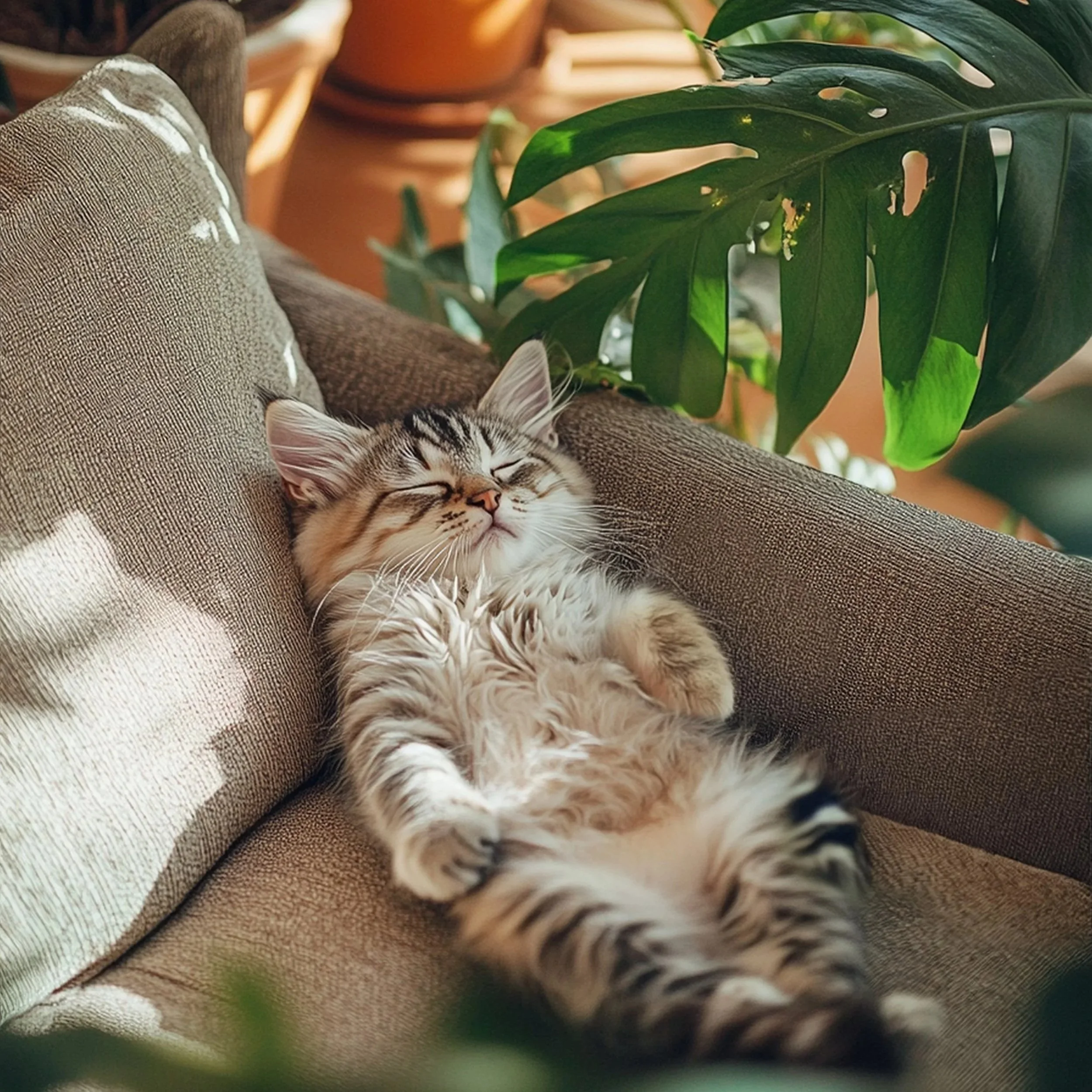
Image source: Freepik
In Closing: Living With Nature, Not Against It
We live in an era of nature-phobia. We've become afraid of soil, pollen, bacteria, and animals — the very things that have shaped and strengthened our immune systems across hundreds of thousands of years of evolution. And the result? Skyrocketing rates of allergies, autoimmune diseases, anxiety, and chronic illness.
The answer isn't more avoidance. It's resilience. Built through nourishing food, a healthy gut, meaningful connection — with other people and with animals — and the humility to recognise that we are part of nature, not apart from it.
Our cats have lived alongside us for more than 10,000 years. They are companions, stress-relievers, and — if you've ever fallen asleep to the sound of purring — perhaps even healers.
With a few sensible habits, a commitment to gut health, and a regular deworming routine for you and your cat, there is absolutely no reason to remove them from your bed, your home, or your life.
The answer has never been to remove the cat. The answer is to become the kind of healthy, vital human that no parasite can easily take hold of.
Written with the intention of bringing science and ancient wisdom together for a more compassionate, connected, and healthy relationship with the animal world.